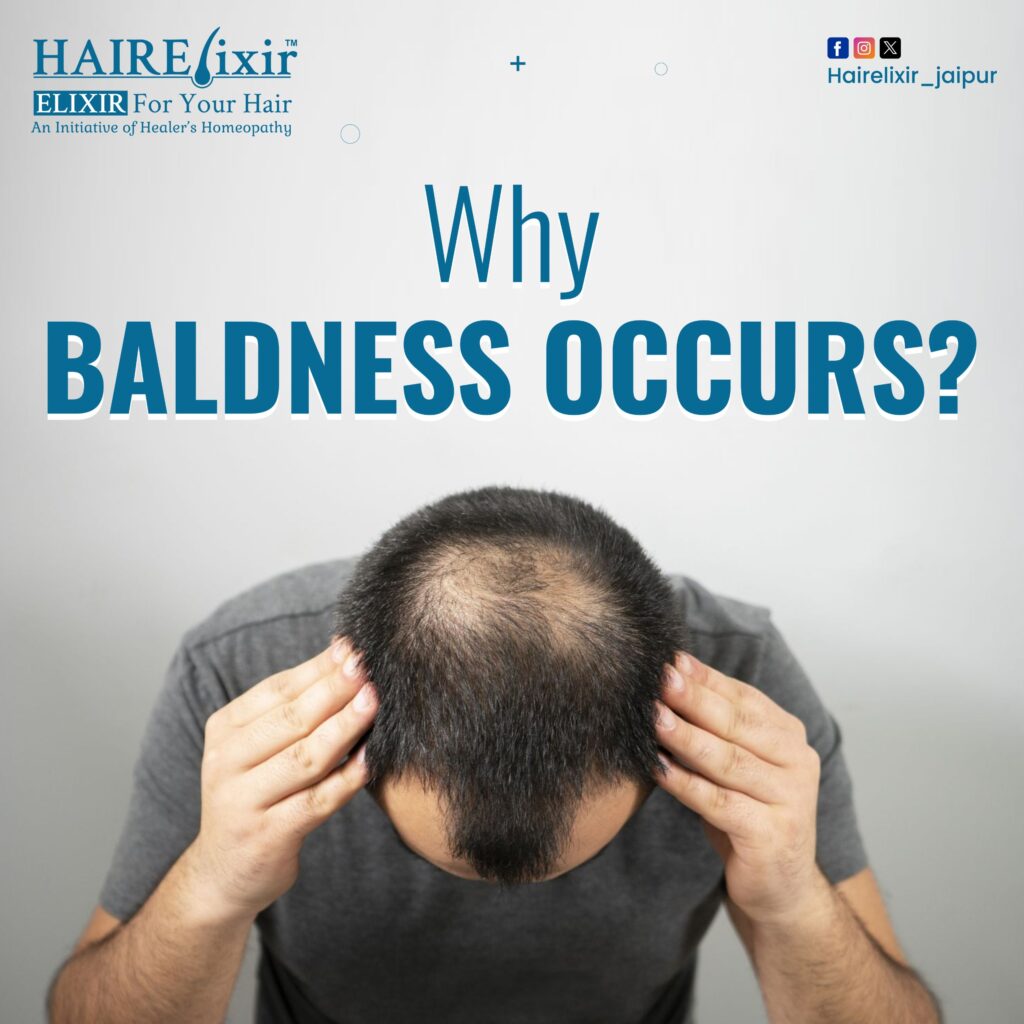
Baldness is primarily divided into two types: male pattern baldness (MPB) and female pattern baldness (FPB).
Baldness is largely linked to genetics. A person with a genetic predisposition or a family member with early baldness is more prone to developing baldness than someone without a family history of baldness.
A male hormone or androgen, specifically dihydrotestosterone (DHT), is responsible for baldness. Testosterone is a natural hormone in males, but females also have some amount of this male hormone. Females with PCOS generally produce an androgen-like hormone called DHEA, which can cause significant baldness.
Our scalp hair is divided into two categories: sensitive hair and resistant hair. Sensitive hair has a prevalence of DHT binding receptors in their hair follicles. These DHT hormones bind with these receptors, causing some constriction of underlying blood vessels that supply blood to the hair follicles. Reduced blood flow to the follicle, if it persists for a long time, leads to thinning of the hair follicles, known as miniaturization of the hair. This condition gradually leads to baldness.
This hair loss is called pattern hair loss because it follows a specific pattern. In males, it is fronto-parietal, and in females, it involves vertex thinning.
Visit : www.hairelixir.in